Lean in Construction: Why Some Projects Run Smoothly While Others Get Stuck
It wasn’t even nine o’clock in the morning, and his phone had already rung twelve times. A site manager had a question about the schedule. A supplier reported a delayed delivery. The client wanted to make a change. And in the meantime, there was still a stack of drawings waiting to be reviewed.
For many construction planners, a working day can sometimes feel like one long exercise in putting out fires. Yet most of these problems don’t come out of nowhere. They are often caused by small disruptions that accumulate throughout the project.
So the question isn’t how you can respond to problems faster, but how you can prevent them from happening in the first place. That’s exactly what Lean in construction is about. In this blog, you’ll discover how Lean helps construction companies reduce waste, improve collaboration, and make projects more predictable and profitable.
Why Lean Is Becoming Increasingly Important in Construction
The construction industry is under pressure. Projects are becoming more complex, margins are under strain, and the demand for speed and quality is increasing. At the same time, many organizations are facing labor shortages, supply chain issues, and increasingly complex regulations.
In such an environment, it can be tempting to simply work harder. But working harder does not solve structural problems.
That’s why Lean asks a different question:
"How can we ensure that work flows smoothly, without unnecessary disruptions?"
By designing processes more effectively, organizations gain greater control over planning, quality, and costs. Not by asking people to work harder, but by removing the obstacles that get in the way of their work.
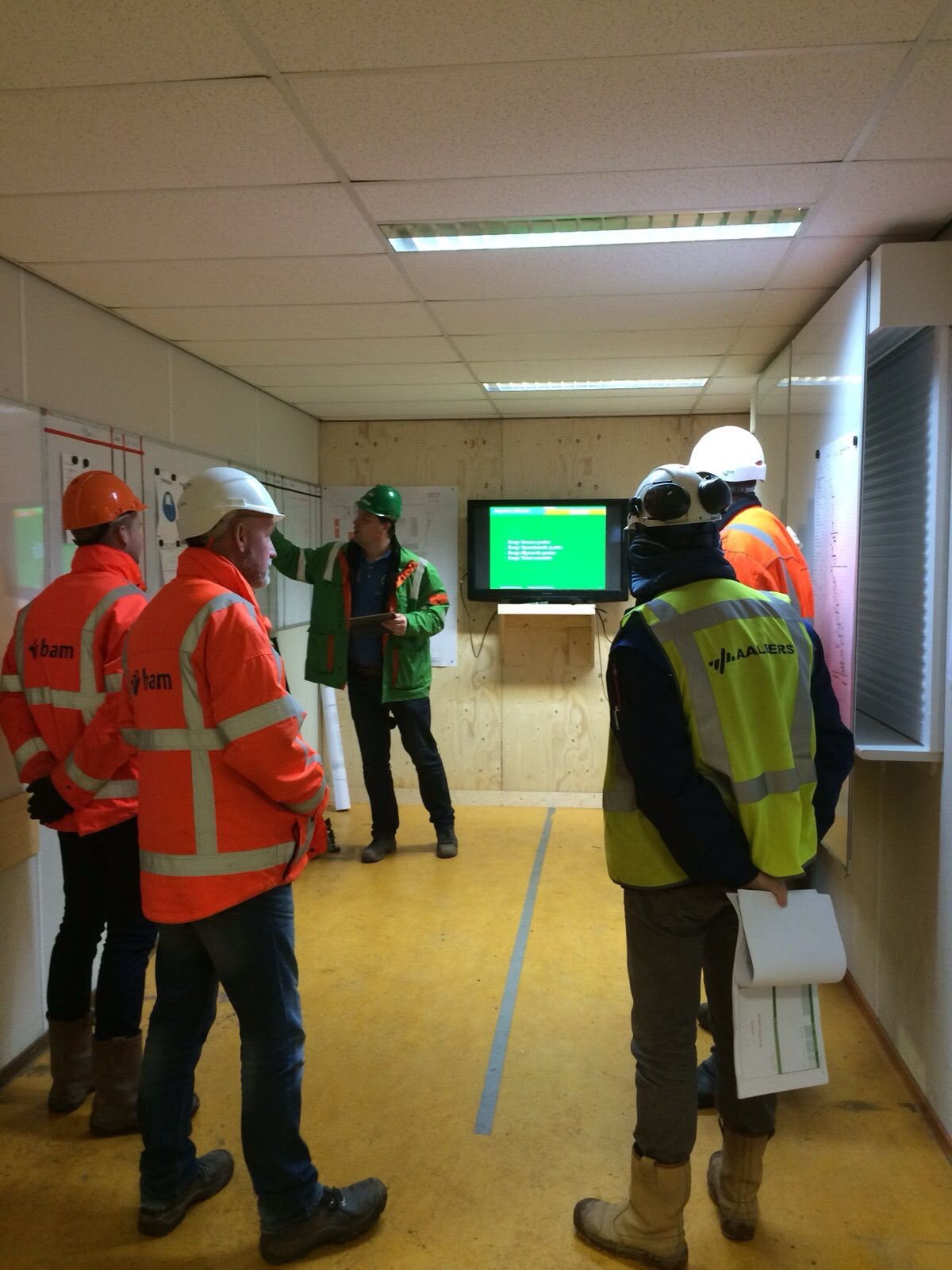
Hidden Waste on the Construction Site
Many construction professionals immediately recognize the visible costs of a project. But the biggest losses are often hidden in everyday disruptions.
For example:
waiting for materials, information, or approvals;
rework caused by errors or changes;
duplicated work due to miscommunication;
unnecessary transportation of materials;
teams having to wait for each other;
overloaded schedules that constantly need to be adjusted.
These activities add no value for the client, but they do cost time, money, and energy.
Lean makes this waste visible. Only when you understand where time is being lost can you make targeted improvements.
What Is Lean in Construction?
Lean is a way of thinking and working that focuses on maximizing customer value while minimizing waste.
In construction, this means that all parties involved work together to deliver a project as efficiently as possible. Not just within their own teams, but also with suppliers, subcontractors, engineers, and clients.
Three principles are central to this approach:
1. Focus on customer value
What does the customer really value? Which activities actually contribute to the end result? By continuously asking these questions, teams can focus more on activities that add value.
2. Create flow
A construction project consists of hundreds of interconnected activities. When one link comes to a standstill, it affects everything that follows. Lean focuses on creating a stable workflow in which activities connect and progress smoothly.
3. Continuously improve
Problems are not something to hide. Instead, they are made visible so teams can learn from them. This creates a culture where continuous improvement becomes part of everyday work.
How Lean Makes Construction Projects More Successful
When Lean is applied effectively, it doesn’t just change the process. It also improves collaboration within projects. Teams gain better insight into the planning. Problems are identified earlier. Decisions are made faster.
This often leads to tangible results:
lower costs of poor quality;
shorter lead times;
higher quality;
greater project predictability;
greater employee engagement;
higher customer satisfaction.
Many organizations also find that the atmosphere on projects improves. There is less frustration because disruptions are resolved earlier and expectations are clearer.
How Do You Get Started with Lean in Construction?
A successful Lean implementation often starts smaller than many organizations think.
Not with a major change program, but with a first improvement step.
A practical approach consists of:
Map the process
Work together to understand how the work actually gets done. Not how it looks on paper, but how it happens in practice.Make waste visible
Where do waiting times occur? Where is information lost? Where is work being duplicated?Involve the people on the work floor
The best improvement ideas often come from the people who work with the process every day.Start with small improvements
Small successes create support and demonstrate that Lean works.Make improvement part of the daily routine
Lean is not a project with an end date. It is a way of working that requires continuous attention.
Building More Than Just Buildings
The greatest benefits of Lean ultimately go beyond tighter planning or lower costs. The real value comes from people working better together and processes becoming better connected. Problems are identified earlier, bottlenecks are resolved faster, and work is carried out more predictably. This creates greater control over projects, more peace of mind on the construction site, and greater confidence among clients.
Lean helps construction companies not only deliver better projects, but also build stronger teams and a culture of continuous improvement. Because ultimately, successful construction is about more than concrete, steel, or bricks. It’s about people working together to get a little better every day.