The Energy Grid in Motion
How integrated collaboration, structure, and governance can reduce grid congestion and provide perspective for the Dutch economy
The Netherlands is in the midst of the energy transition. Electricity demand, driven by electrification, renewable energy generation, heat pumps, and charging infrastructure, is growing faster than the electricity grid can accommodate. As a result, local grid overloads are emerging: grid congestion. This means there is insufficient capacity in the electricity grid to enable new connections, which prevents businesses from expanding, slows down housing development, and hinders the transition to clean energy.
This bottleneck is not only technical in nature, but also of major societal and economic significance. That is why the government has placed grid congestion high on the agenda, including through the National Grid Congestion Action Programme, in which government, grid operators, and market parties collaborate on faster and smarter grid expansion.
At Enexis Productiestraten Noord, this national and regional urgency led to a concrete assignment: connecting more customers faster, both large-scale consumers and small users, while also providing clear visibility on when connections will become possible. The objective was not only to resolve technical constraints, but to establish integrated governance: jointly making decisions with all involved parties, managing risks, and providing customers with precise insight, on a quarterly or annual basis, into their connection prospects, enabling them to prepare and align their energy needs in advance.
To achieve this, our Masters work closely with Enexis as well as all relevant internal and external stakeholders, including municipalities, provinces, contractors, housing associations, suppliers, and regulators.
Enexis is a grid operator responsible for the construction, management, and maintenance of the electricity and gas networks in a large part of the Netherlands. The company ensures that households and organisations have safe and reliable access to energy and plays an important role in the energy transition.
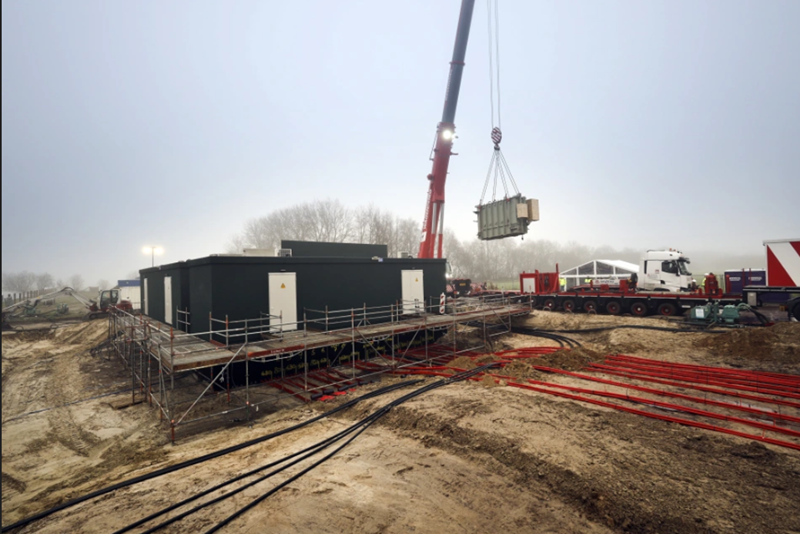
One part of Enexis is Productiestraten Noord, which is responsible for the operation and maintenance of the energy network in the provinces of Groningen, Drenthe, and Overijssel. Within the Productiestraten Middenspanning, the focus is on accelerating the expansion of the medium-voltage transmission grid in order to resolve bottlenecks and support the energy transition. This is achieved through standardisation, more efficient working methods, and close collaboration.
Challenge
The core challenge of the project lay in simultaneously resolving technical constraints while providing clear perspective to customers awaiting connection. The growing demand for electricity means that in many regions the transmission capacity of the medium-voltage grid is becoming saturated, while low-voltage networks in residential areas are also under pressure and complex connections require additional coordination.
As a result, requests for new or upgraded connections end up on waiting lists, leaving large consumers uncertain about when they will actually be connected.
This was precisely the reason for the initiative: on the one hand, accelerating the connection of large consumers to enable economic development and sustainability; on the other hand, creating transparency for these customers by providing insight into when and where actual grid capacity will become available.
This challenge spans multiple chains within Enexis (including medium voltage, low voltage, and complex projects) and requires integrated governance across these domains.
It is not limited to internal coordination within Enexis alone; it also requires alignment and collaboration with external parties such as municipalities, provinces, contractors, and suppliers to arrive at a realistic and executable planning approach.
Solution
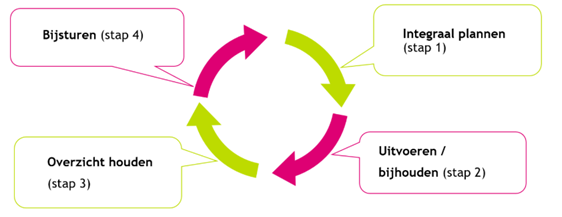
Together with Enexis, our Masters designed an integrated Lean approach in which cross-chain collaboration is central. The foundation of this approach is viewing grid congestion as a geographically bound bottleneck, in which six integrated value streams are distinguished within the medium-voltage domain. The core of the solution consists of four steps:
1. One integrated value stream
Together with all internal and external stakeholders, a single shared value stream was defined: from initiation and planning through to execution and connection. This explicitly includes all relevant chains within the medium-voltage domain, making dependencies visible across the full scope of the challenge. As a result, it becomes clear who is involved at each stage and how activities influence one another.
2. Planning based on bottlenecks
The value stream was translated into an integrated chain-level planning approach based on geographically defined bottlenecks. Each bottleneck consists of multiple sub-projects (six main sub-projects), which together determine when additional grid capacity becomes available. This planning takes into account different types of work within medium voltage, including grid expansion and complex connections with longer lead times. By scheduling these bottlenecks over time, perspective is created: who is next in line and when a large consumer can be connected.
3. Governance and control mechanisms
A clear control mechanism was established on top of the planning. Through fixed governance structures and recurring coordination, continuous steering takes place on:
Safety
Quality
Available capacity
Schedule reliability (delivery predictability)
Costs
Risks are identified early and actively managed. This applies across the medium-voltage chain, ensuring that bottlenecks are resolved in an integrated way. When any of these aspects come under pressure, stakeholders collaborate to restore control, keeping the overall chain stable and manageable.
4. Transparency and data-driven working
Dashboards (including those based on Microsoft Power BI) provide real-time visibility into progress. This enables more informed decision-making, faster intervention, and clear communication both internally and towards customers. The insights are used for medium-voltage projects and related customer processes, making them more predictable and manageable.
Results
Thanks to this approach, a foundation has been established on which the connection process can be both standardised and accelerated. Processes that previously often took three to four years, from planning to final connection, are now being realised within approximately 1.5 years. This is achieved not only by resolving technical bottlenecks, but also by ensuring that all stakeholders work from a single integrated planning framework.
Large consumers are, over time, provided with realistic and reliable insight into their connection prospects. At the same time, small consumers, neighbourhood-based initiatives, and complex connection projects also benefit from greater predictability and shorter lead times. Because internal and external stakeholders are involved in an integrated way, decisions are made faster, risks are managed earlier, and processes are executed more efficiently.
These results mean that Enexis Productiestraten Noord has established a scalable and controllable foundation for further accelerating the energy transition: more capacity, less uncertainty, and a future-proof grid design.
This case demonstrates that grid congestion cannot be solved through technical measures alone; success depends primarily on effective organisation and collaboration. With structure, governance, and oversight, we do not only create solutions, but also provide the Netherlands with perspective on a reliable energy supply, with the right insights at the right time.
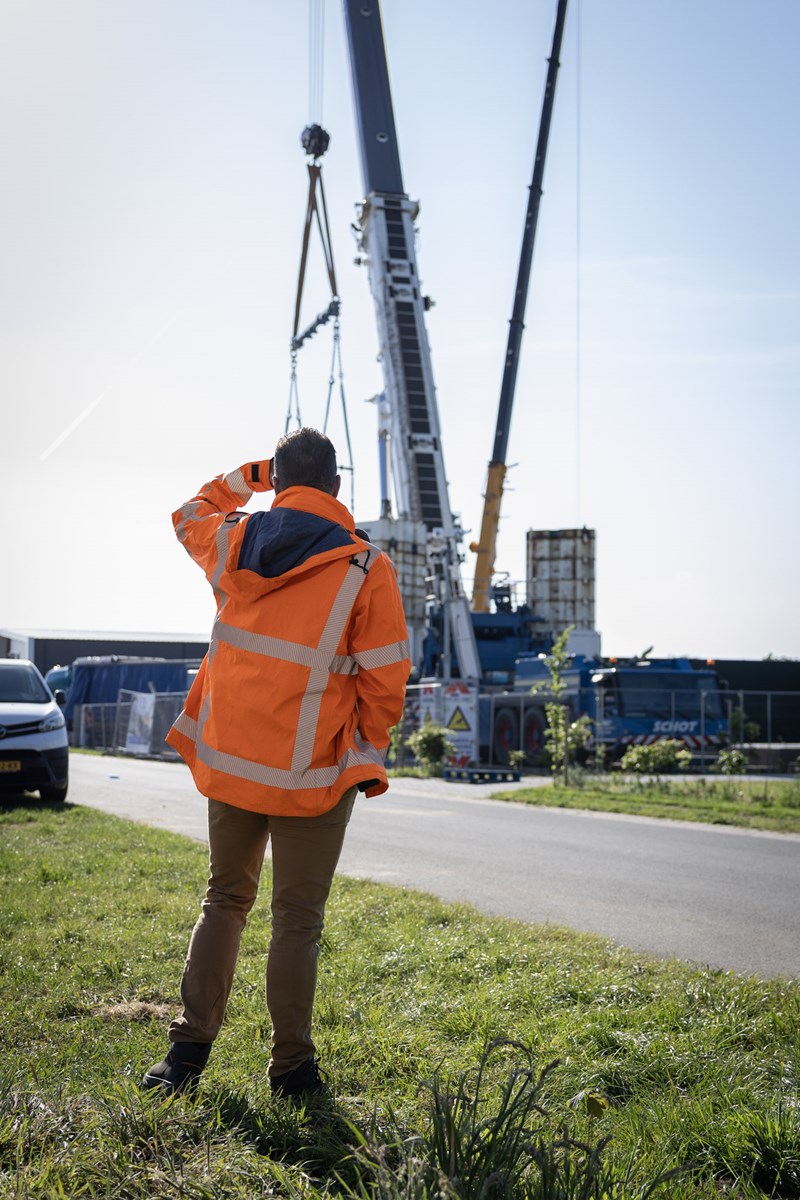
In this way, our Masters support Enexis in continuous improvement, acting as the organisation’s eyes and ears on the ground.
We provide tailor-made solutions focused on results, at all levels of the organization. I would be happy to have a no-obligation conversation with you!

te Plate Managing Partner