Smurfit Westrock: a Lean culture
Preventing issues together instead of firefighting: Smurfit Westrock strives for a Lean culture.

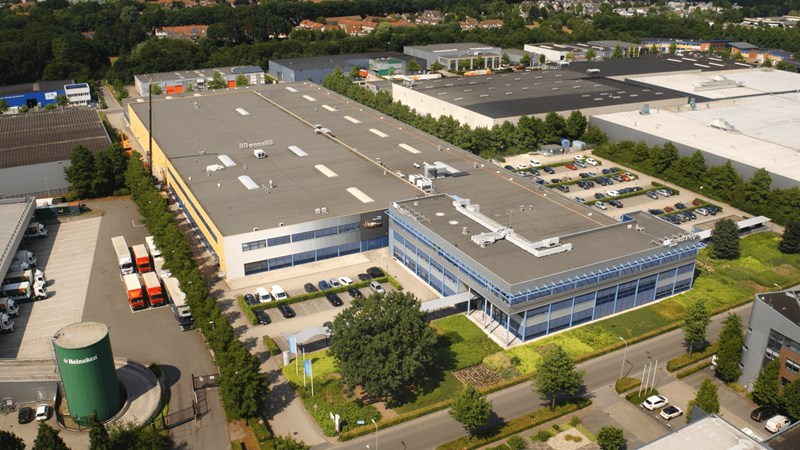
In the world of luxury packaging and in-store displays for shops and supermarkets, Smurfit Westrock in Deventer is known as a leading player. With a strong focus on developing and producing high-quality products made from corrugated cardboard, the company is part of Smurfit Kappa, a global industry player.
The company is successful, but behind the scenes it is in the process of transitioning from its current way of working to a more structured approach to process improvement. This is a challenge that many organizations will recognize. David van Elk, one of our Lean experts, is closely involved and has supported Jeroen Preuter (team leader in the design department) and Franc L’Herminez (team leader in the internal services department) in their growth towards a Lean culture within the organization. Where did the biggest challenges lie, and how were they solved? Read on to find out!
Challenge
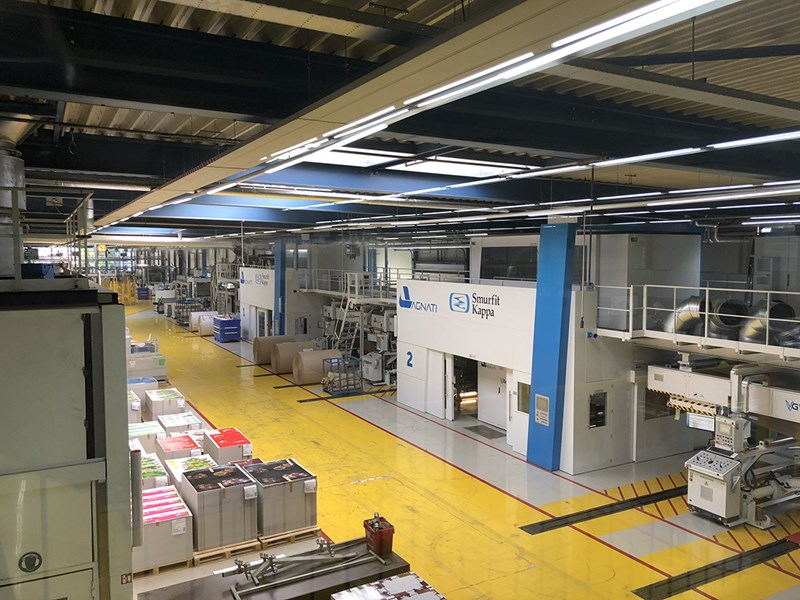
The first challenge for Smurfit Kappa Zedek was creating awareness among employees about the need for this change. The organization was used to a culture of “firefighting,” where problems are partly solved on an ad-hoc basis. “We are an organization where many people have been working for a very long time. All these people are used to a certain way of working; they know it, and they prefer to keep it that way. It is quite difficult to convince them that things suddenly need to be done differently when the company’s results are good. That is our biggest challenge,” says Jeroen.
Franc, responsible for internal sales, has long advocated for a structured approach with process optimization. Franc says: “This organization is very focused on the fact that managers solve problems, but as a result they have too little time for the team they are responsible for. Managers should spend less time firefighting and more time proactively working with the team to optimize the process and create minimal lead times and a ‘first time right’ culture. Something had to change.”
Solution
To address these challenges, Smurfit Kappa Zedek gradually decided to embrace a Lean culture. The first step was to build a “mirror” to measure team performance and define success for each department. This included measuring job satisfaction, on-time delivery of services to customers, doing things right the first time, and working efficiently.
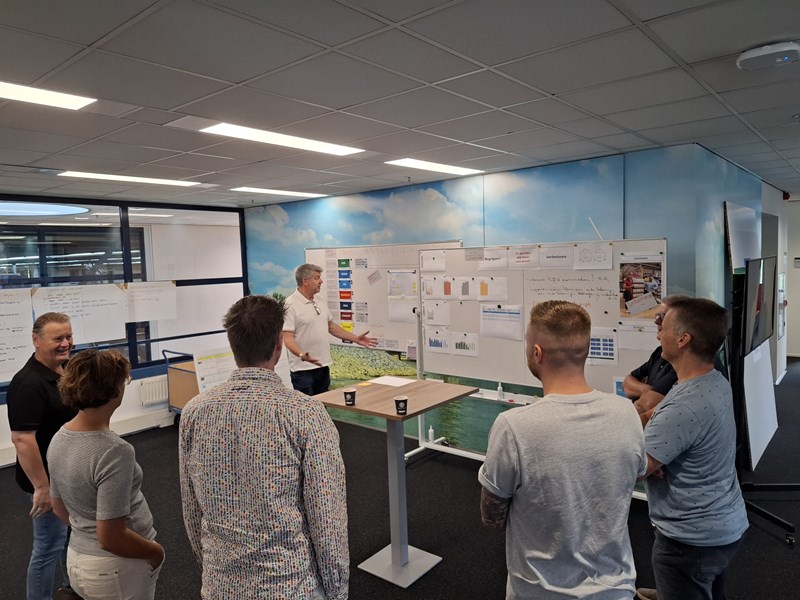
Next, reflection moments were implemented in both departments during weekly and daily starts to understand where improvements were needed and how these could be addressed. KPI-driven steering was introduced, with planned actions based on the results. In addition, the role of “leadership” was redefined more as “coaching.” Team leaders Jeroen and Franc were encouraged to support employees in improving processes. The goal was to foster a culture of proactive problem-solving and continuous improvement. Step by step, this is gradually becoming more successful.
Franc explains: “To make such a change process successful, the management team of the company must actively support it. They are an important part of the organization’s culture. The fact that they are now willing to join in says a lot for us. We want to translate strategic objectives to the departments so that everyone understands why they are working on something. The goal? Create support and radiate and motivate this from the top of the organization!”
Results
The implementation of a Lean culture has so far led to a shift in employees’ mindset. Improvements are now seen as an essential part of daily work rather than as occasional events. As a result, more and more small successes are emerging that are gradually changing the overall organizational culture.
In the internal sales department, reflection moments and improvement projects have led to a better understanding of customer needs and faster order lead times. Employees feel more involved in improving processes and are motivated to contribute to the organization’s growth. “That is ultimately what we also want to achieve, that we truly do it together. We achieve our goals together!” Franc shares.
In the design department, the focus on clear communication and standardized processes has led to greater efficiency and fewer errors. Employees have become more aware of the impact of their work on the bigger picture and work together towards common goals.
Gilles Lescure, one of the creative designers in the design department, also shares his experience of this transformation process. Gilles has been working at Smurfit Kappa Zedek for years, so he knows how difficult it is to implement change. “This Lean approach forces us to think about communication with colleagues, what is my role, how should I communicate something, and what exactly do I need to communicate. Thanks in part to David’s enthusiasm, it became enjoyable to work on this.”
According to Gilles, the Lean approach makes you aware of what you are doing. “Before we started working with Lean, there were many isolated ‘islands’ within the department where everyone was working independently to achieve a goal. Now everything is much more professional, and especially more efficient and structured. We as employees increasingly realize that this is the direction we need to follow to operate like a well-oiled machine, achieve good results, and create an optimal working atmosphere.”
Small steps make the difference
The journey towards a Lean culture is a long-term process that requires patience and commitment. Smurfit Kappa Zedek has taken important steps and is now beginning to reap the benefits of these efforts. With a growing awareness of the importance of process improvement and collaboration within and between departments, the organization can continue to grow efficiently in the market!