Lean by Olympia
Successful Lean implementation at Olympia:
Various teams are working on the efficiency and growth of their own processes. Olympia has recently taken an important step in its pursuit of process improvement across the entire organization by starting with Scrum and Agile. This has given the company faster results and more control over improvements.
Now it is time for the next step: implementing Lean! Why? To address problems not just once, but in a structural way. After a successful introduction to Lean through the Lean Drone Game, in which various teams experienced the benefits of Lean process improvement, they were ready to tackle their own processes.
Five teams within Olympia each selected a problem to address using Lean, guided by Masters In Lean coaching. The teams ‘Business Support’, ‘Marketing & Communications’, ‘Corporate Accounts’, ‘SME’, and ‘Specialties’ got to work on a suitable challenge. Curious how that went? You can read it in this case!

Our work is work. We work on work that matters.
Imagine if, as organisations, employers and employees, we would continuously reflect on the meaning of the work we do. We would then make different choices. We would share more knowledge. We would interact more consciously with our environment. We would keep learning throughout our lives. We would do work that matters, because we understand why we do it.
Challenge
The various teams within Olympia each had their own challenge. To start with Lean, it is essential to first clearly map out the most important challenges. What did they work on?
Business Support Team
The Business Support team aimed to improve efficiency within their tasks at the start of this project.
Marketing & Communications
In the Marketing & Communications team, the challenge was to set priorities and gain more control and structure over daily operations.
Corporate Accounts
The Corporate Accounts team wanted to gain insight into the return on investment of their training programs for their largest client. If the training trajectory is completed successfully, the candidate will be employed by the client. If the candidate is found unsuitable, the team must find an alternative assignment for the flex worker, which is not desirable for either the flex worker or Olympia. A clear opportunity for improvement!
SME Team (Small and Medium-sized Enterprises)
For the SME teams, it was important to work more efficiently in order to offer more vacancies to job seekers and increase the placement rate. This team already works with daily stand-ups, but there was room to make this process much more efficient.
Specialties Team
The Specialties team was facing slower-than-expected growth that needed to be addressed, despite their strong value proposition to clients.
Once the challenges were clearly defined, it was time to start working on the solutions.
Solution
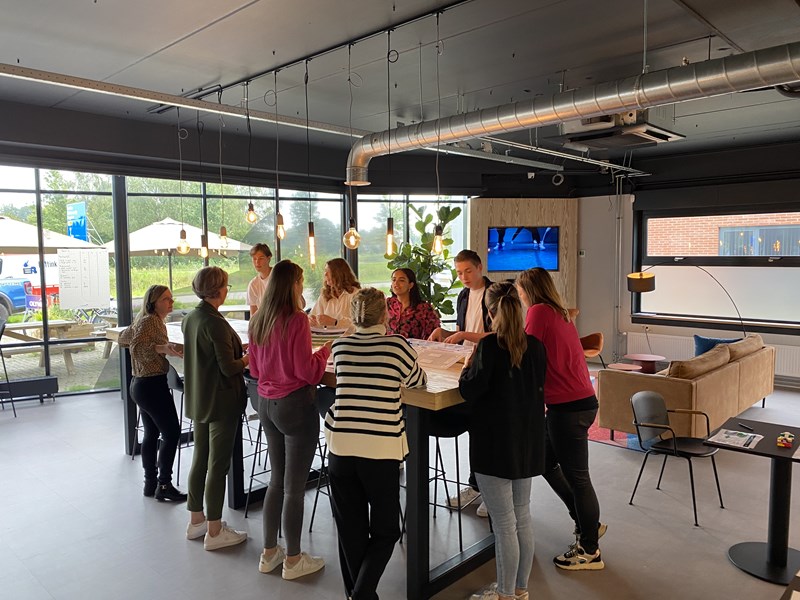
After defining their challenges, each team got to work using a Lean approach. Curious how they did it? Read on!
Business Support
The Business Support team tackled their challenge with a thorough and structured approach. They started by identifying and clearly defining the specific problems they were facing, including a reflection using the stop–change–continue method. They then conducted an in-depth fishbone analysis to uncover and understand the root causes of these issues. With these insights, they explored and tested various solutions to determine which were most effective in addressing the identified problems. This process enabled them to make well-informed decisions on the best approach to improve efficiency within the Business Support team.
Marketing & Communications
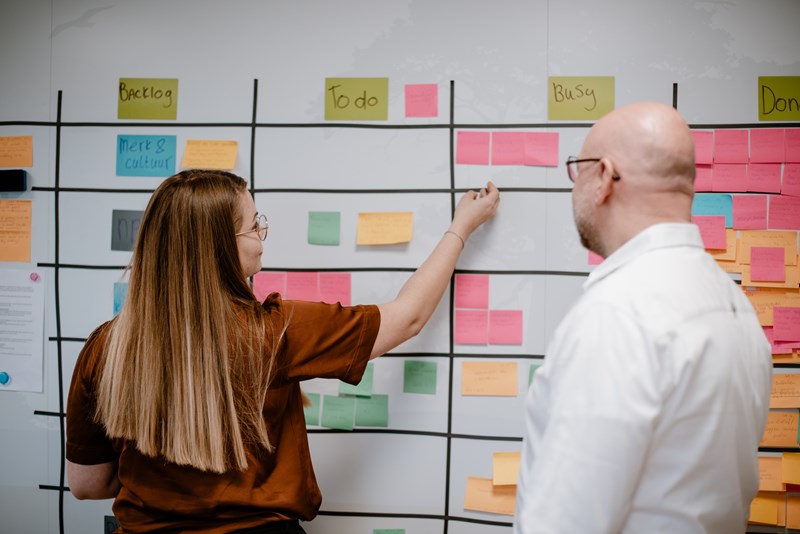
The Marketing & Communications team adopted a structured approach by first creating a comprehensive overview of all ongoing tasks. These tasks were then organized and prioritized at the start of each week using a Kanban system, giving the team clear visibility of what needed to be done and in what order. By applying this method, they were able to manage their workload more effectively, ensure that key priorities were not overlooked, and improve overall productivity and output.
Corporate Accounts
The Corporate Accounts team addressed their challenge by first quantifying the scope of the problem and conducting an in-depth data analysis. By collecting and analyzing this data, they were able to identify patterns and trends that might otherwise have gone unnoticed. These insights were then used to develop tailored dashboards, enabling management to make better-informed decisions and implement targeted steering actions to improve performance and achieve their objectives.
SME Teams (Small and Medium-sized Enterprises)
The SME teams focused on improving their daily routines by implementing sharper KPIs and visual management during their daily stand-ups. By using measurable goals and visual tools, they gained quick insight into their progress and performance, allowing them to adjust in a timely manner when needed and improve efficiency.
Specialties
The Specialties team used the Business Model Canvas as a tool to analyze both their current state and their desired future state. This provided them with a clear understanding of how they operate and helped identify potential areas for improvement and growth opportunities. With these insights, they were able to take targeted actions to realize their growth ambitions and enhance operational efficiency.
In this way, each team approached the implementation of Lean in its own unique way, exactly what we like to see!
Results
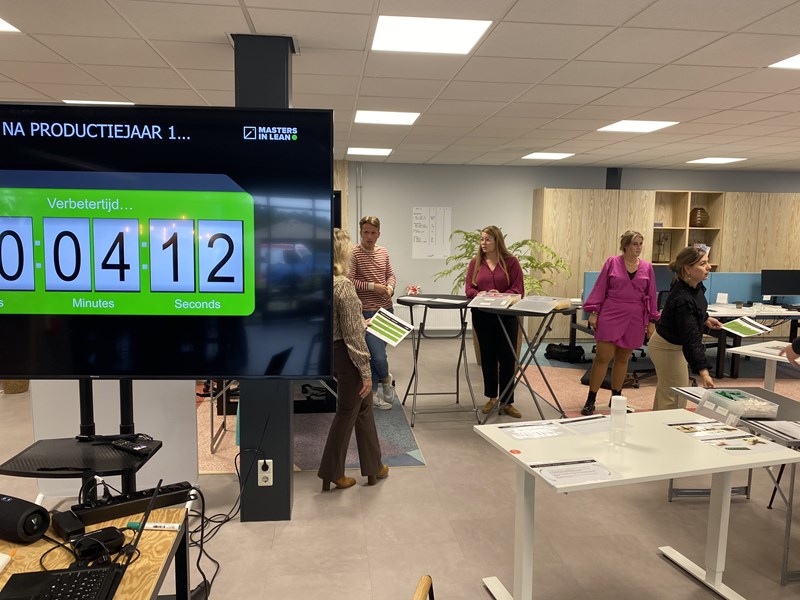
All teams implemented Lean to address their challenges and problems. What did it deliver? Read on!
Business Support
Business Support achieved significant improvements by implementing a structured daily stand-up board, including key items such as the mailbox, onboardings, reasons for departure, and pending envelopes. This resulted in better control over daily activities, increased focus, fewer interruptions, and clearer task allocation, with fewer non-core tasks for recruiters.
Marketing & Communications
The Marketing & Communications team improved their daily processes, leading to better visibility into their workload and timely, high-quality delivery of outputs based on aligned priorities. Efficiency and clarity became the foundation of their work.
Corporate Accounts
The Corporate Accounts team saw positive results with an increase in training return on investment, positioning them well to continue their collaboration with the client. The team is now better able to demonstrate achieved results and can steer based on quantitative insights when needed.
SME Team (Small and Medium-sized Enterprises)
The SME team focused on the future by using the 2024 annual plan as a starting point and actively steering toward achieving their goals. This resulted in shorter, more effective daily stand-ups, with clear ownership now lying within the team.
Specialties
The Specialties team laid a solid foundation for their 2024 growth plan, achieving several quick wins such as improved handovers to the SME team and clearer task distribution within the team. This will support them in realizing their growth ambitions and improving operational efficiency.
Lean is the secret ingredient
The goal of this project? To get a little better every day at serving clients and flexible workers on their path to meaningful work. During this period, Masters In Lean was responsible for selecting the right Lean approach, training the teams in the necessary techniques, and empowering them to improve their processes.
Ultimately, all teams achieved these successful results themselves, and they have every reason to be proud. It shows that by improving smaller processes across different teams, the larger process across the entire organization improves as well. Lean is the secret ingredient behind this success!