Increasing customer demand in the energy transition
Increasing customer demand in the energy transition
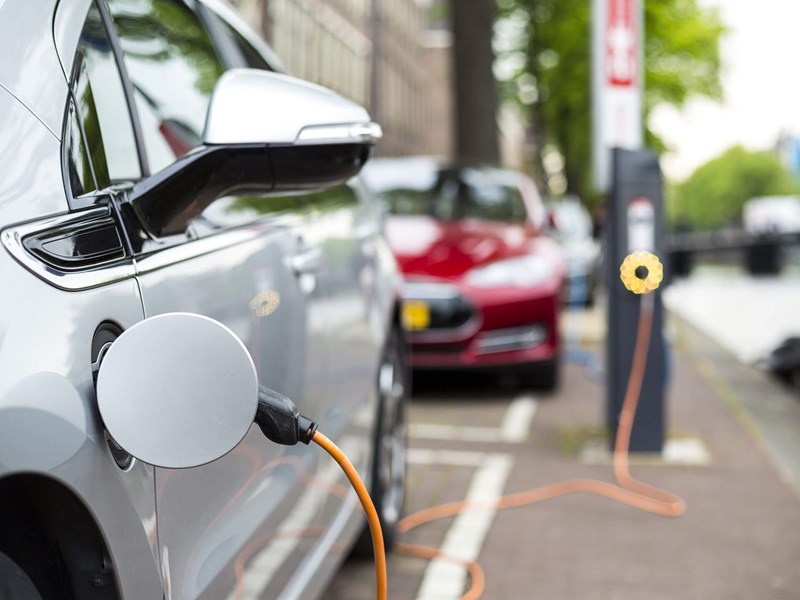
As part of the energy transition, we are seeing an increasing number of electric vehicles on the road. Electric cars are rapidly gaining popularity. As a result, electric vehicles and charging stations are becoming an increasingly common part of the streetscape. Grid operators are working together with energy suppliers, municipalities, and market parties to facilitate electric driving. Alliander’s subsidiary Liander aims to support the growing number of charging stations, but its current process was not yet designed for this growth.

Alliander is a large Dutch energy network company responsible for the energy supply of 3.3 million customers. Alliander consists of a group of companies, including Liander and Liandon. Together, they provide extensive expertise in energy networks, energy technology, and technical innovation. Alliander employs approximately 7,000 people. Through its energy networks, Alliander is responsible for the distribution of gas and electricity across a large part of the Netherlands. The grid operator Liander maintains the energy networks in good condition, manages distribution, and connects customers to the energy infrastructure.
Challenge
The current process around charging stations within Liander was inefficient and not future-proof. The process involved multiple workflows, meaning that several contractors were often required to ultimately get a single charging station up and running. For example, the charging station must be installed, connected, and a smart meter must be fitted. The existing process used for this was not operationally stable and is unable to handle the expected exponential growth in customer demand.
Solution
To improve processes, the first step is to map the current process. In order to map Alliander’s process (as part of the end-to-end chain process, from start to finish), several methods were used:
Following the customer throughout the process
Conducting interviews with process stakeholders
Organizing workshops with representatives of the end-to-end process
Based on these results, the current process was established and validated. During this phase, extensive attention was given to the bottlenecks experienced by both Alliander and us within the existing process. Using the provided frameworks and the expected (strongly increasing) customer demand over the next five years, a stable and robust process design was developed in collaboration with the process stakeholders within the chain.
Results
After the process design phase, a solid implementation plan was developed in which the new process was rolled out end-to-end across the chain within 3–6 months. By resolving the bottlenecks in the old process and designing a new one, Masters In Lean helped grid operator Alliander move towards a stable and future-proof process. In parallel, a procurement process was initiated. Bring on the electric cars!
Want to discover how Lean can help you?
We deliver tailored solutions focused on results, across every level of your organization. I'd be happy to have a no-obligation conversation with you to explore how we can help.
Loeffen Managing Partner