Compliance with the WKB
Complying with the Wet Kwaliteitsborging, WKB (Building Quality Assurance Act)
In 2022, the Building Quality Assurance Act (Wet Kwaliteitsborging, WKB) was introduced. Until its full implementation, approximately 10% of simpler construction projects were used as pilot projects. If the system proves to be insufficient or the costs increase too much, the minister may decide not to implement the law fully or to exclude certain parts of it. Although it was still uncertain whether the legislation would be fully enforced, from 2024 onwards all construction projects across all risk classes must comply with the regulations. At that time, Wessels Vakbouwers’ processes did not yet meet these requirements. It was time to make a change.

Wessels Vakbouwers has been a specialist subcontractor and independent contractor for fifty years in the commercial construction, residential construction, and renovation sectors. Every day, more than 200 employees work on various projects spread across the Netherlands. The majority of the work consists of specialised masonry. In addition, they also carry out scaffolding, concrete, and carpentry work. By continuously investing in their employees and focusing on quality improvement, partnerships, and Lean planning, they aim to be “the best” for the customer. Sustainable collaboration is their ambition!
Challenge
The Building Quality Assurance Act (WKB) has three objectives: improved assurance of construction quality, a stronger position for the consumer, and the stimulation of quality improvement and reduction of failure costs. To achieve this, a system is being developed in which an independent market party assesses relevant aspects of the quality of the final product.
To comply with this assessment, it was necessary for Wessels Vakbouwers to be able to ensure and embed quality in its daily operational processes. The key question was: how can this be achieved in practice?
Solution
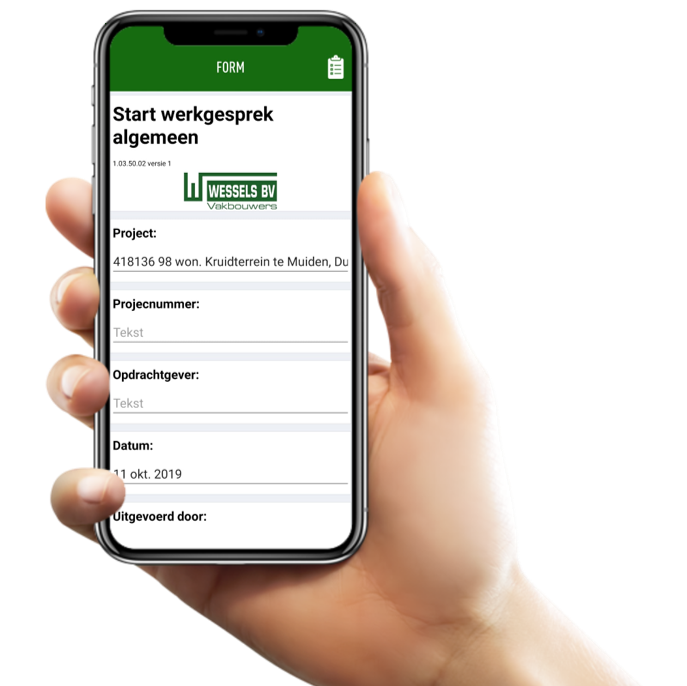
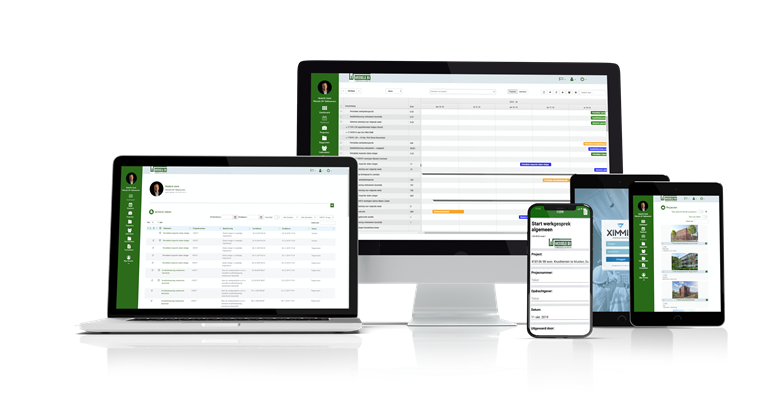
We introduced our digital tool Masters In Process (abbreviated: “MIP”), which enables smart digital working. With MIP and well-designed, targeted quality forms, quality becomes a key focus at the right moments in the process. This makes it possible to gain and maintain control over quality throughout the process. MIP enables a smart workflow in which activities are not only organised more efficiently, but also make the work more enjoyable.
Employees can receive targeted quality tasks through MIP. Examples include inspecting scaffolding or digitally recording a project handover. Employees can easily view their open tasks, adjust them if necessary, and schedule them themselves. This makes tasks transparent and easy to monitor.
In addition to introducing the MIP tool, Masters In Lean supported both the design and implementation of the system. This included:
Designing forms that seamlessly align with operational processes
Developing instruction cards / work instructions for use
Providing training for key users
On-the-job training and evaluation sessions
Results
Several processes at Wessels Vakbouwers have been integrated into Masters In Process (MIP), including safety, quality, operational handover, and the creation and processing of work orders. As a result, Wessels Vakbouwers now complies with the Building Quality Assurance Act (WKB).
Quality assurance bodies are very positive about Wessels Vakbouwers’ new way of working. From both Wessels Vakbouwers and Masters In Lean, a broader rollout is planned in which all co-makers in the chain will be more extensively involved. In addition, other sectors are also exploring the possibilities of applying this approach within their own organisations. A true example for other industries!
We provide tailor-made solutions focused on results, at all levels of the organization. I would be happy to have a no-obligation conversation with you!

te Plate Managing Partner